Spot Skin Cancer Early: The ABCDE Rule
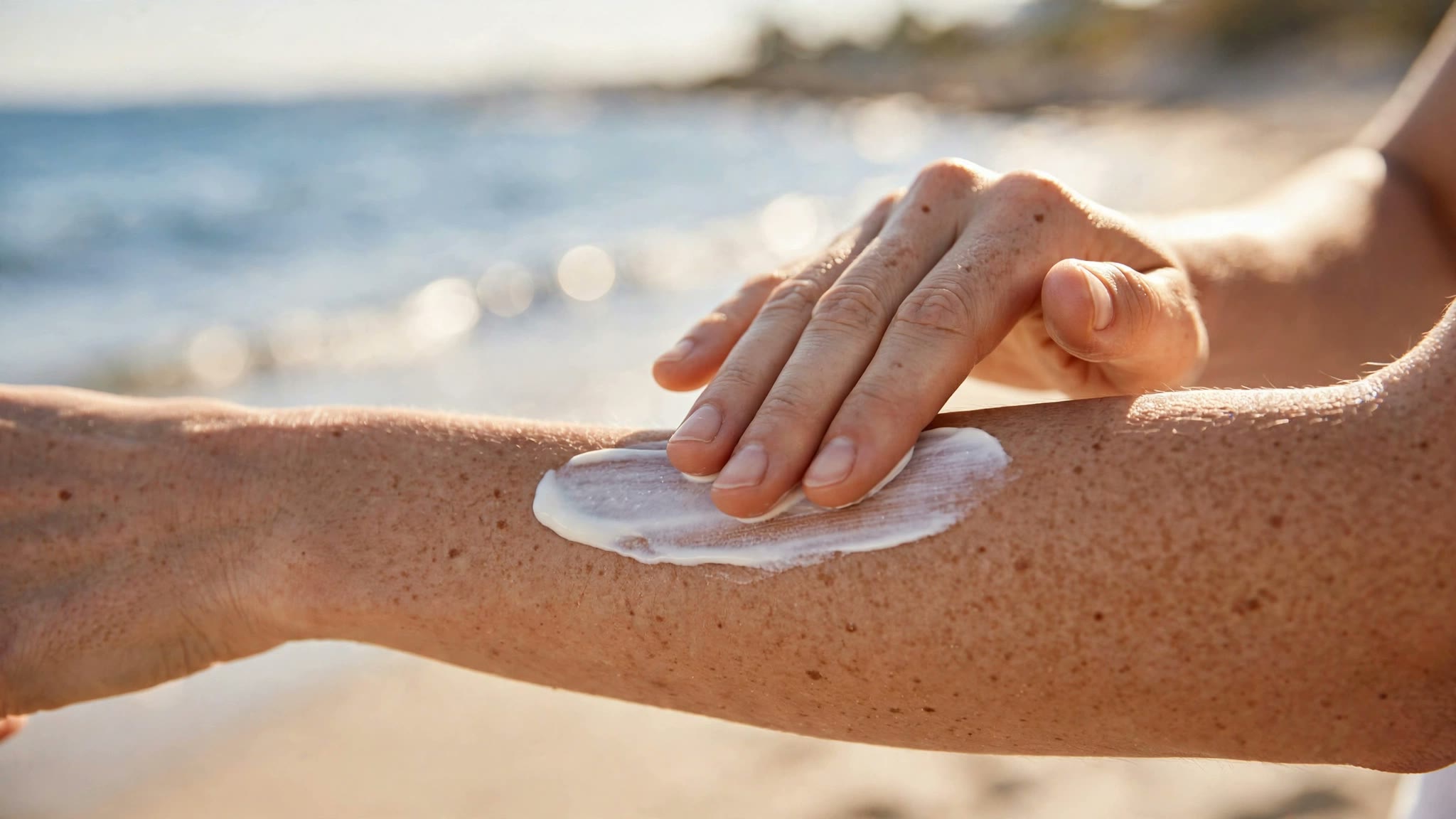
You probably check your phone 100 times a day. But when was the last time you checked your own skin?
Here's why it matters: skin cancer is the most common cancer in the United States, and roughly 1 in 5 Americans will develop it by age 70, according to the American Academy of Dermatology. Melanoma, the deadliest form, is expected to account for more than 100,000 new U.S. cases this year alone.
Now the part that should change your morning routine: when melanoma is caught before it spreads beyond the skin, the 5-year survival rate is about 99%, per the American Cancer Society. Let it spread to distant organs, and that number drops to roughly 35%. The difference between those two outcomes often comes down to something you can do in front of your bathroom mirror in five minutes.
Dermatologists teach a simple memory aid called the ABCDE rule — and once you know it, you'll never look at a mole the same way again.
The ABCDE Rule, Explained
Think of your moles as passengers on a flight: the ABCDEs are the boarding-pass checks that decide whether one needs closer attention.
A — Asymmetry
Draw an imaginary line through the middle of a mole. On a normal mole, the two halves match. On a suspicious one, they don't — one half looks noticeably different in shape from the other. Healthy moles are typically round and symmetrical.
B — Border
A normal mole has smooth, even edges. A warning sign is a mole with blurry, jagged, or notched borders — edges that look like a coastline on a map rather than a smooth circle.
C — Color
Normal moles are usually a single shade of brown. Flag any mole that shows multiple colors or unusual shades — patches of tan, brown, black, red, white, pink, or even blue-gray. Color variation within one spot is one of the strongest visual clues dermatologists use.
D — Diameter
Most melanomas are larger than 6 millimeters — roughly the size of a pencil eraser — when diagnosed. But don't treat that as a rule: small melanomas exist. Size matters, but change matters more.
E — Evolving
This is the most important letter. Any change in a mole — in size, shape, color, height, or texture — deserves attention. New itching, crusting, bleeding, or a spot that simply looks different from all your other moles (dermatologists call this the "ugly duckling" sign) is reason enough to call your doctor.
One ABCDE flag doesn't mean you have cancer. It means you have something worth a professional look. Dermatologists would rather biopsy 50 harmless moles than miss one melanoma.
How to Actually Do a Skin Self-Exam
The American Academy of Dermatology recommends checking your entire body once a month. Here's the practical version:
- Strip down in a well-lit room with a full-length mirror and a handheld mirror.
- Start at the top: scalp (use a blow dryer or ask a partner to part your hair), face, ears — including behind them.
- Work down: front and back of your neck, chest, belly, under your breasts.
- Arms: both sides, plus underarms and palms, between fingers, under nails.
- Legs: front and back of thighs, calves, tops and soles of feet, between toes, under toenails.
- Finish with the mirror: use the handheld mirror for your back, buttocks, and behind your knees.
Pro tip: take phone photos of any mole that catches your eye. Dated photos turn the "E for Evolving" check from guesswork into evidence — you'll see the change instead of trying to remember it.
Who's at Highest Risk?
Anyone can get skin cancer, but the odds climb if you:
- Have fair skin, light eyes, red or blond hair, or freckles that burn easily
- Tanned indoors — just one indoor tanning session raises melanoma risk, and frequent tanning before age 20 multiplies it
- Have had 5 or more blistering sunburns — they roughly double melanoma risk
- Have 50+ moles or any atypical (dysplastic) moles
- Have a family history of melanoma
- Live or work in high-sun states like Florida, Arizona, Texas, or Southern California
And don't skip protection because it's October. UV rays cause damage year-round — they bounce off water, sand, and snow, penetrate cloud cover, and pass through car windows. Up to 80% of UV rays get through overcast skies.
The 5 Habits That Actually Prevent It
Catching it early is half the battle; never getting it is the other half. The prevention list is short and proven:
- Sunscreen, daily, SPF 30+ — broad-spectrum, a shot-glass amount for full-body coverage, reapplied every 2 hours outdoors. This alone cuts melanoma risk by about 50% in long-term trials.
- Seek shade from 10 a.m. to 4 p.m., when UV is strongest.
- Cover up — tightly woven shirts, wide-brim hats, and UV-blocking sunglasses.
- Never use tanning beds. Indoor tanning devices are classified as Group 1 carcinogens — the same category as tobacco.
- Keep the monthly self-exam on your calendar, right next to your other health checks.
When to Call a Dermatologist
Make the appointment if you spot any ABCDE warning sign, if a spot bleeds or won't heal within a few weeks, or if anything just feels "off." A typical full-body skin exam takes 10 to 15 minutes, is painless, and — if a biopsy is needed — that takes about 5 minutes with local numbing.
Most dermatology visits end with "that's nothing, see you next year." That's the best possible outcome. The point of the ABCDE rule isn't to make you anxious about every freckle — it's to make sure the one spot that matters gets seen in time.
This article is for general health information only and isn't a substitute for medical advice. If you notice a suspicious spot, talk to a dermatologist or your doctor.
📚 Keep reading:

That Ringing in Your Ears: Why It Happens & What Helps
Roughly 1 in 10 American adults has experienced tinnitus — that phantom ringing, buzzing or hissing only you can hear. Here's why it happens and what actually helps.

Restless Legs at Night: Why They Won't Sit Still
Creepy-crawly legs that keep you up past midnight? Restless legs syndrome affects up to 1 in 10 Americans. What's behind it — and 7 proven ways to calm them.

Gout: Why America's Most Painful Arthritis Is Surging
Over 9 million Americans have gout — and rates keep climbing. What causes the 'disease of kings,' which foods trigger flares, and how to fight back.