Flight Blood Clots: Why Your Next Trip Could Be Risky
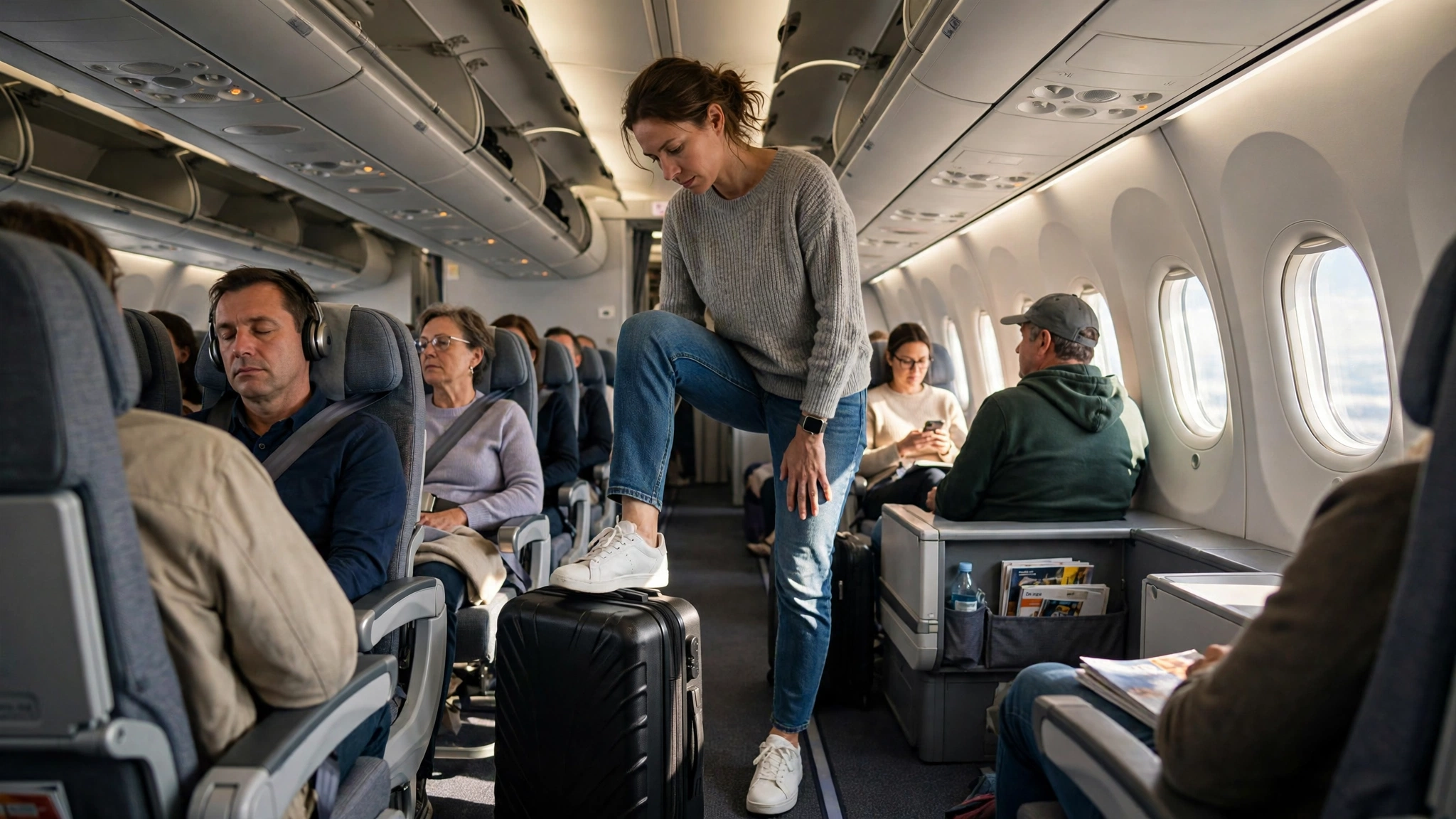
You board the plane, settle into your seat, and don't move for six hours. When you land, one calf aches — swollen, tender, maybe a little warm. Most travelers shrug it off as stiffness. But it can be something far more dangerous: a deep vein thrombosis, or DVT — a blood clot forming in the deep veins of your leg.
More than 300 million people take long-distance flights (generally longer than four hours) every year, according to the CDC. Blood clots can form in the deep veins of your legs during travel because you sit still in a confined space for long periods. And the risk isn't limited to air travel — anyone traveling more than 4 hours by air, car, bus, or train can be at risk.
Blood clots are a serious and growing public health concern. In the United States, as many as 900,000 people are affected by venous thromboembolism each year, and about 100,000 people die of pulmonary embolism annually, CDC data shows. With holiday travel season around the corner, this is the year to take the risk seriously.
Why sitting still is the enemy
Your calves are often called your "second heart" — every step you take squeezes blood from the leg veins back up toward the heart. When you sit motionless for hours, that pumping action stops. Blood pools and slows in the veins of your lower legs, and slow-moving blood is blood that can clot.
The longer you are immobile, the greater your risk. Researchers estimate that flights lasting at least four hours carry roughly a threefold increase in venous thromboembolism risk, with the absolute risk around 1 in 4,656 to 1 in 6,000 long-haul flights. That sounds low — but with hundreds of millions of trips a year, it adds up to thousands of preventable events. And the risk does not end at landing: studies show the elevated risk persists for the first two weeks after travel, and in some cases up to eight weeks.
This isn't "economy class syndrome." Clots strike first-class passengers and road-trippers too. The aisle seat in first class is no protection — stillness is the problem.
Who is at higher risk
Anyone can develop a blood clot, but some travelers carry much more risk than others. The CDC lists these key risk factors for travel-related clots:
- Older age — risk rises after age 40, and climbs steadily after 60
- Obesity (BMI of 30 or higher)
- A previous blood clot or family history of clots
- Estrogen-containing birth control or hormone replacement therapy
- Current or recent pregnancy, or the postpartum period
- Active cancer
- Recent surgery, hospitalization, or injury (including wearing a leg cast)
- Inherited clotting disorders (thrombophilia)
- Limited mobility — prolonged bed rest, paralysis, or a long recovery
Women taking oral contraceptives, people with severe obesity, and travelers with a history of clots face the highest risk. If several of these apply to you, talk to your doctor before your trip — some people benefit from prescription-strength prevention.
Know the warning signs: DVT and pulmonary embolism
Here is the unnerving part: about half of people with DVT have no symptoms at all. When symptoms do appear, they usually show up in one leg — the affected one:
- Swelling, often in just one calf or thigh
- Pain or cramping that starts in the calf and feels like a charley horse
- Tenderness along the vein
- Red or discolored skin
- A leg that feels warm to the touch
A DVT becomes life-threatening when part of the clot breaks off and travels through the bloodstream to the lungs. That is a pulmonary embolism (PE), and it can be fatal. Warning signs of a PE include:
- Sudden, unexplained shortness of breath
- Chest pain that worsens when you breathe deeply
- A cough that may bring up blood
- Rapid or irregular heartbeat
- Feeling lightheaded or faint
If you have any of these symptoms — especially within days or weeks of a long trip — treat it as an emergency and get medical help immediately. PE can kill quickly, but it is treatable when caught in time.
How to protect yourself on your next trip
The good news: simple steps dramatically lower your risk.
Move every 1–2 hours. On a plane, walk the aisle. On a road trip, plan rest stops. If you cannot get up, do seated exercises: extend your legs and roll your ankles in circles, pull your toes toward your shin and hold, press your heels down and lift your toes, and march your knees up toward your chest for 15 seconds at a time. These calf-pump movements are the single most important thing you can do.
Stay hydrated — skip the alcohol. Drink water or juice before and during travel. Alcohol and caffeine are diuretics that can leave you dehydrated, and dehydration thickens the blood. Aim for a full water bottle (around 16–20 ounces) every couple of hours.
Wear compression stockings. Graduated compression socks or stockings squeeze the legs gently and improve blood flow. A Cochrane review found they significantly reduced travel-related clots — only 3 cases among stocking users versus 47 in the control group. They complement movement, not replace it.
Choose your seat wisely. An aisle seat makes it far easier to get up regularly. Avoid crossing your legs, which pinches the veins behind your knees. Wear loose, comfortable clothing — nothing tight around the waist or legs.
Don't sleep through the whole flight. Try not to sleep more than about four hours at a stretch; set a quiet alarm if you need to, so you wake up to move.
Talk to your doctor first. If you have had a clot before, take hormones, are pregnant, or recently had surgery, ask your physician about extra precautions before a long trip. Note: aspirin is not recommended as a clot preventive for travel unless your doctor specifically advises it.
The bottom line
A six-hour flight to visit family shouldn't come with a medical emergency attached. The absolute risk for any one traveler is low — but with millions of Americans hitting the road and the skies each holiday season, a little prevention goes a long way. Walk the aisle, flex those ankles, drink your water, and know the warning signs. Your legs — and your lungs — will thank you.
📚 Keep reading:
Prediabetes: 1 in 3 American Adults Has It — Most Don't Know
96 million American adults have prediabetes and 8 in 10 don't know it. The good news: it's reversible with proven lifestyle changes. Here's the test to ask for and the plan that works.

Frozen Shoulder: Why It Locks Up and How to Thaw It
Frozen shoulder locks the joint in three painful stages — freezing, frozen, thawing — and hits 1 in 5 people with diabetes. Here's why it happens, how long it lasts, and the treatments that actually restore movement.
Gallstones: The Belly Pain Millions of Americans Ignore
Upper-belly pain after a greasy meal, nausea, aching shoulder — gallstones send over a million Americans to surgery every year. Here are the signs, the risk factors, and what actually prevents them.