Your Grip Strength Predicts Your Health — Here's Why
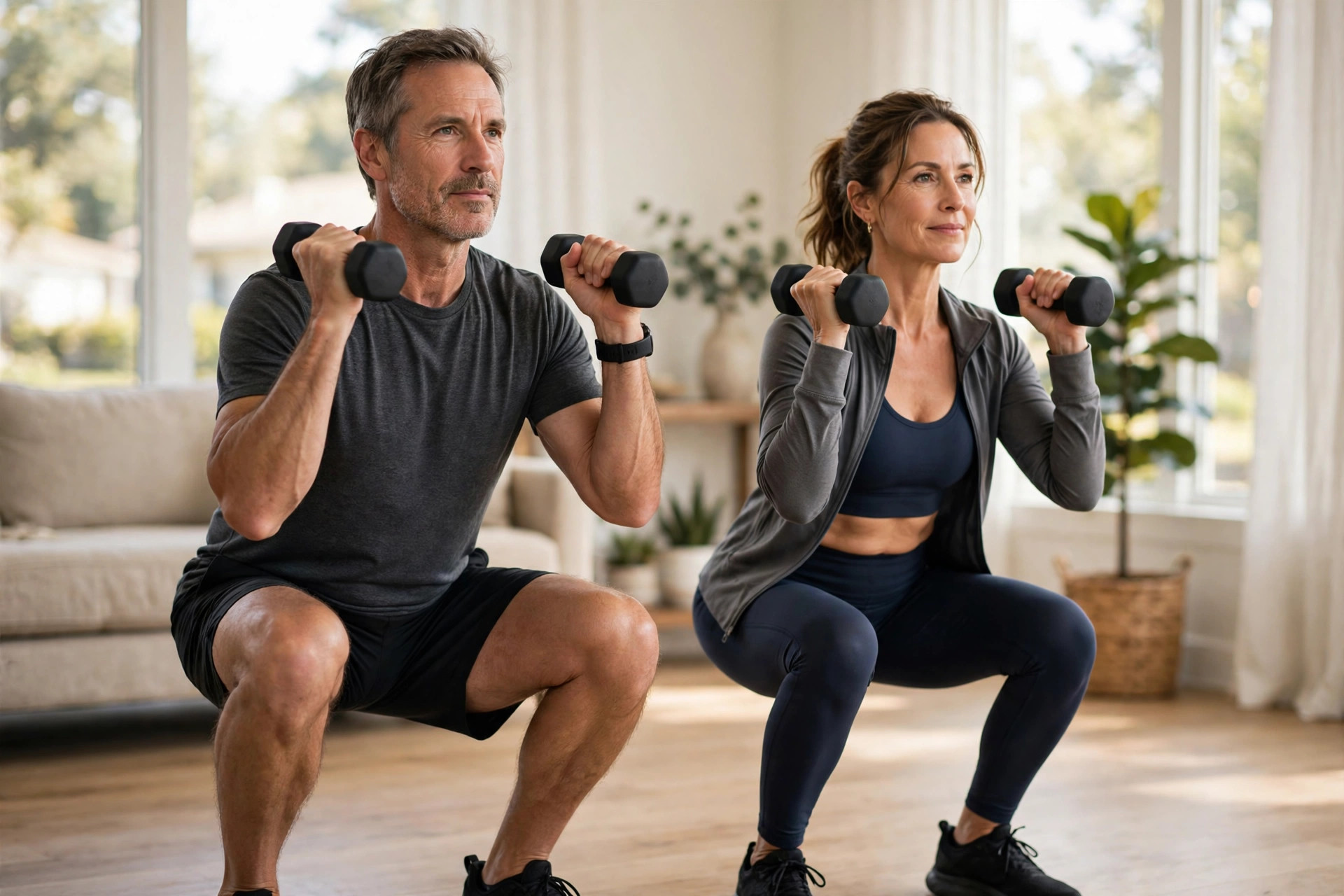
It takes two seconds, costs nothing, and requires no lab work: squeeze something as hard as you can. Researchers now believe that single measure — your grip strength — may be one of the most revealing numbers about your long-term health.
Over the past decade, study after study has linked a firm handshake to lower risks of heart disease, stroke, and early death. Doctors have started calling grip strength a quick window into your biological age — how your body is actually aging, regardless of the date on your birth certificate.
What the landmark studies found
The biggest finding came from the PURE study, published in The Lancet in 2015. Researchers measured the grip strength of roughly 140,000 adults across 17 countries and followed them for about four years. The result: weaker grip was consistently tied to higher rates of death from any cause, heart attacks, and strokes — and the association was stronger than the one seen with blood pressure for predicting cardiovascular death.
To put it concretely, every 11-pound (5-kg) decline in grip strength was associated with a measurable jump in risk — for heart disease, for stroke, and for dying from any cause.
Later research has only added weight. In older adults, low grip strength predicts disability, slower walking speed, hip fractures, longer hospital stays, and slower recovery after surgery. Some geriatricians now treat it as a vital sign, alongside blood pressure and resting heart rate.
And the decline starts earlier than most people think: grip strength typically peaks in the early 30s and begins a slow, steady slide afterward, accelerating after age 50. By 70, many adults have lost 20 to 30 percent of the grip they had at their peak — often without noticing.
Why your hands know your future
Grip strength isn't really about your hands. It's a proxy for total muscle mass and strength, which protect you in at least three ways:
Muscle is your metabolic engine. Lean muscle burns more calories at rest, improves insulin sensitivity, and helps keep blood sugar in range. After 40, adults lose roughly 1 to 2 percent of muscle mass per year — a condition called sarcopenia — unless they actively train against it. Since muscle makes up about a third of your body weight, that loss quietly reshapes your metabolism.
Strength keeps you independent. The ability to catch yourself in a fall, carry groceries, open jars, and rise from a chair depends on total-body strength — and grip correlates with all of it. Falls are the leading cause of injury-related death among Americans over 65, according to the CDC, and strong muscles are one of the best defenses.
It's a whole-body report card. A weak grip tends to travel with the things that shorten lives: sedentary habits, poor diet, chronic inflammation. That's exactly why it predicts so well — it summarizes your lifestyle in a single number.
Test yourself right now
You don't need a medical device. Try these two at-home checks:
The dead hang. Grab a sturdy pull-up bar or a playground bar and hang. If you can hold for 60 seconds, your grip is in solid shape. Under 30 seconds suggests real work to do. (Start with both hands, feet able to touch the ground until you trust the setup.)
The farmer's carry. Pick up the heaviest dumbbells, grocery bags, or gallon jugs you can safely manage and walk for 60 seconds. Failing early — or needing to stop and rest — flags grip endurance as a weak link.
For a precise number, handheld dynamometers cost about $20 to $30 online. As a rough benchmark, men averaging above 90 pounds and women above 60 pounds of grip force tend to score well in population studies, but any improvement from your own baseline is progress.
Four exercises that rebuild grip fast
Grip responds to training at any age — and it doesn't take a gym membership.
Dead hangs (2 sets, work toward 60 seconds). The single best return on investment. Hanging loads your forearms, shoulders, and core all at once, and even a few seconds of daily practice adds up.
Farmer's carries (3 walks of 60 seconds). Hold heavy weights at your sides and walk with tall posture. This builds the crushing grip you use for everything from opening jars to carrying suitcases.
Towel wringing or rice grabs. Wring out a wet towel ten times each direction, or squeeze a bucket of rice repeatedly. Old-school forearm work that builds crushing and pinching strength equally.
Rubber band finger extensions. Loop a thick rubber band around your fingers and spread them open 20 times. Most people train only the closing muscles; opening against resistance balances the hand and reduces elbow pain.
Add two to three of these to your routine twice a week. Most people feel a difference within a month — jars open more easily, grocery bags feel lighter, and the dead hang gets noticeably longer.
The bigger picture
Grip training is not really about grip. It's an entry point into the one form of exercise the CDC says American adults do least: muscle-strengthening. Fewer than one in four meet the federal guideline of working all major muscle groups at least twice a week.
But here's the good news the research keeps confirming: it's never too late. Studies of adults in their 70s, 80s, and even 90s show that strength training adds muscle, improves balance, and raises quality of life. The hand you shake with is telling you something — and unlike your genes or your age, it's something you can change.
Start with the dead hang today. Your future self will thank you — probably by opening the pickle jar on the first try.
📚 Keep reading:

The Sauna Effect: What Heat Does for Your Heart
Finnish research links frequent sauna bathing to dramatically lower risks of heart disease and dementia. Here is what the science says — and how to start safely.
The Fiber Gap: Why 95% of Americans Miss This Nutrient
Over 90% of U.S. adults fall short on fiber, with average intake stuck at just 15 grams a day. Here is the gap, why it matters, and how to close it.
Why Strength Training After 40 Is Your Best Anti-Aging Move
Adults lose up to 8% of muscle per decade after 30 — but just 30 minutes of weekly strength training is linked to lower risk of death, diabetes, and heart disease.