Why Strength Training After 40 Is Your Best Anti-Aging Move

Most Americans treat muscle as a vanity project — something you build for the beach, then let go of once real life gets busy. That's a mistake, and it may be one of the most consequential health mistakes people make in midlife.
Here's the number that should change your mind: a pooled analysis of 16 long-term studies, published in the British Journal of Sports Medicine, found that just 30 to 60 minutes of muscle-strengthening activity per week was linked to a 10 to 20 percent lower risk of dying from any cause — including heart disease, diabetes, and cancer. And adults who combined strength training with aerobic exercise saw roughly 40 percent lower all-cause mortality than people who did neither.
That's not a two-hour daily gym habit. That's two 20-minute sessions a week, in your living room if you want.
The muscle loss nobody warned you about
Starting around age 30, adults lose roughly 3 to 8 percent of their muscle mass every decade, a slow leak researchers call sarcopenia. After 60, the leak turns into a flood.
Muscle is what keeps you standing upright, climbing stairs, catching yourself when you trip, and living independently in your 70s and 80s. Yet strength training is the most skipped part of American exercise. According to the CDC, only about 1 in 4 adults meets both the aerobic and muscle-strengthening guidelines, and roughly a third meet the muscle-strengthening target of two days a week.
Most people who "work out" walk or jog — which is great for the heart — but never do a single push-up, squat, or resistance-band row. They're building an engine with a strong heart and a shrinking chassis.
Your muscles are metabolic machinery
Muscle does far more than move you around. Skeletal muscle is the body's biggest glucose sink, soaking up most of the sugar in your blood after a meal. More muscle means steadier blood sugar, better insulin sensitivity, and a lower risk of type 2 diabetes — which makes sense of another finding from that 2022 analysis: the link between strength training and diabetes risk was especially strong, with benefits climbing all the way to about an hour a week.
The benefits stack up across the board:
- Heart and blood pressure: Resistance training improves circulation, blood vessel function, and resting blood pressure. Large reviews have even found isometric moves — wall sits and planks — to be among the most effective exercises for lowering blood pressure.
- Bones: Muscle pulls on bone, and bone responds by getting denser. For women in particular, who can lose up to 20 percent of their bone density in the five to seven years after menopause, resistance training is one of the best defenses against osteoporosis.
- Balance and falls: Strength plus balance work is the closest thing we have to a fall-prevention prescription. The CDC reports that 1 in 4 Americans over 65 falls each year — and strong legs and hips are the single best protection against a fall that ends independence.
- Brain: Exercise that challenges your body improves executive function and slows cognitive decline, and strength training shows the same brain benefits as cardio in clinical trials.
The sweet spot is smaller than you think
One of the most reassuring findings from the research is the dose-response curve: it's J-shaped, not a straight line. The biggest drop in mortality risk lands between 30 and 60 minutes per week. Beyond about an hour, the additional benefit plateaus.
Translation: you don't need to become a weightlifter. You need to become consistent.
If you're starting from zero — especially if you have high blood pressure, joint problems, diabetes, or heart disease — check in with your doctor first. Then follow the beginner formula that exercise scientists actually recommend.
How to start: the 40-minute beginner week
Schedule: two days a week, 20 minutes each. Train every major muscle group each session: legs, hips, back, chest, shoulders, and core.
Week 1–2: bodyweight only. Do one set of each, 8 to 12 slow reps:
- Chair-assisted squats (sit back until you touch the chair, then stand)
- Countertop push-ups (hands on a sturdy counter, body in a straight line)
- Standing rows with a light resistance band hooked to a door
- Wall planks (hold 15 to 20 seconds)
Week 3–4: add light resistance. A $20 set of dumbbells or bands is enough. Move to two sets. When you can finish 12 comfortable reps, add a little weight — that's progressive overload, the whole secret of strength training.
Rules that matter more than equipment:
- Form beats weight. Move slowly — two seconds up, two seconds down. If a joint hurts (not muscle burn, but sharp pain), stop that exercise.
- Rest 48 hours between sessions so muscles rebuild. Monday and Thursday works perfectly.
- Hit every major muscle group each workout. Partial routines (only arms, only legs) leave benefits on the table.
- Track it. A phone note — date, exercises, reps — is the difference between people who stick with it and people who drift.
Fuel the rebuild: eat enough protein
Training breaks muscle down; food and sleep build it back. The federal RDA for protein is 0.8 grams per kilogram of body weight (about 58 grams for a 160-pound adult), but that target was set to prevent deficiency, not to support muscle maintenance. Expert panels like PROT-AGE suggest 1.0 to 1.2 grams per kilogram for healthy adults over 60 — for that 160-pound adult, roughly 70 to 90 grams a day.
That looks like a palm-sized portion of chicken, fish, eggs, or tofu at most meals, plus protein-rich breakfasts (Greek yogurt, eggs, or a shake). You don't need exotic powders — you need consistent protein, spread across the day, plus sleep, which is when growth hormone does most of its repair work.
The takeaway
Muscle is your retirement account for the body: small, early deposits compound into decades of independence. You don't need a gym membership, two free hours a day, or a tolerance for pain. Two short sessions a week, bodyweight to start, dumbbells when ready — 30 to 60 minutes total — buys some of the largest health returns in the medical literature.
Your 70-year-old self will thank you for the two workouts a week you start now.
📚 Keep reading:

Loneliness Is as Deadly as Smoking 15 Cigarettes a Day
The U.S. Surgeon General declared loneliness a public health epidemic. Half of American adults feel lonely — and the risks rival heavy smoking. Here's how to fight back.

How Much Water Do You Actually Need? Experts Explain
The 8-glasses rule is mostly myth. Here's what doctors say about how much water Americans really need — and the signs you're not drinking enough.
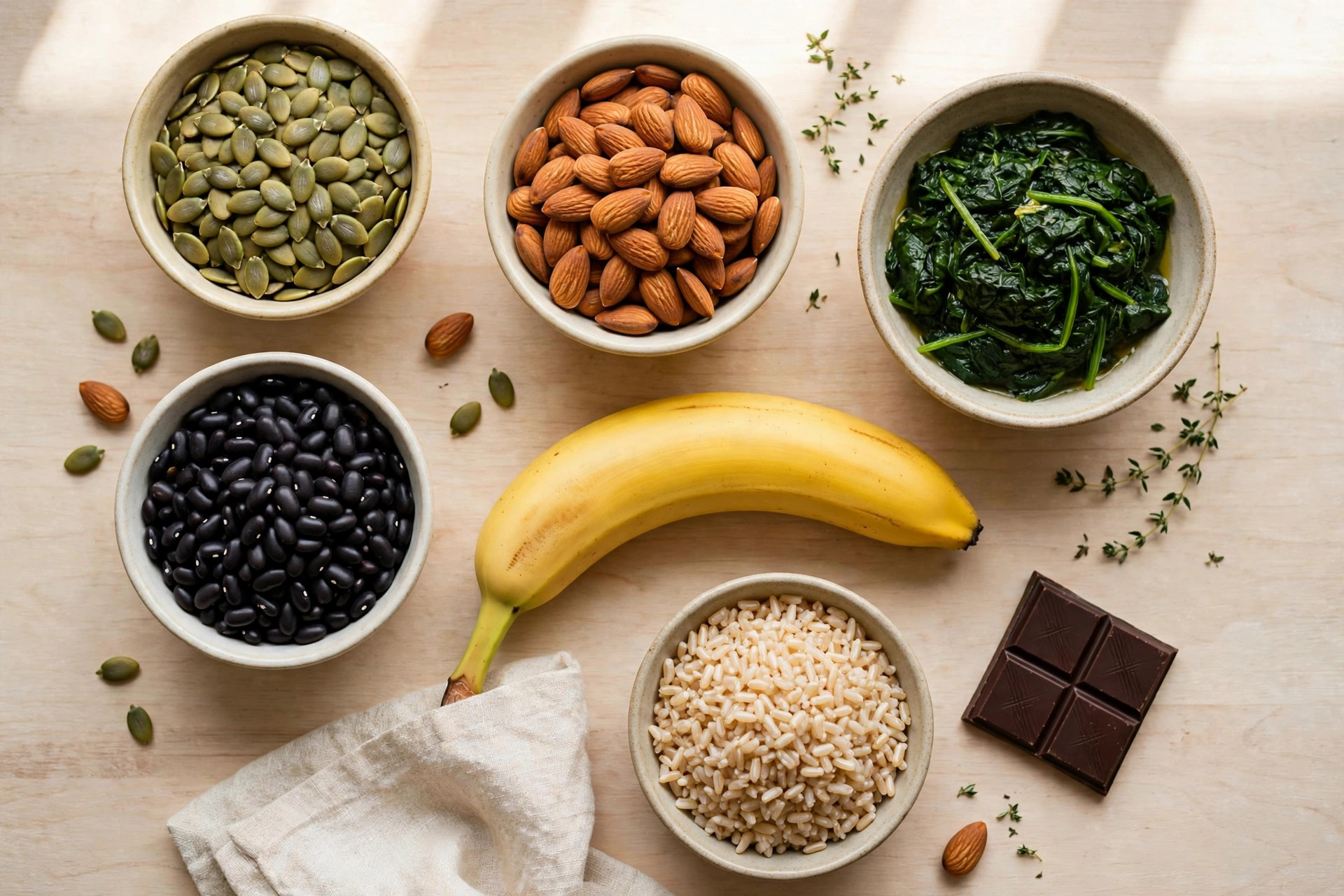
Why Half of Americans Don't Get Enough Magnesium
Roughly half of U.S. adults get less magnesium than they need. Here's why it matters — and the foods that fix it.