The Fiber Gap: Why 95% of Americans Miss This Nutrient
Protein is having the biggest moment in grocery history. In 2026, fast-food chains began flashing protein badges on their apps, the federal government's new Dietary Guidelines raised the daily protein target, and grocery shelves filled with protein waters, protein chips, and protein ice cream.
Meanwhile, the nutrient Americans are actually missing barely got a whisper.
According to the U.S. Department of Health and Human Services, more than 90% of women and 97% of men fail to get enough fiber — the plant-based carbohydrate that lowers cholesterol, steadies blood sugar, and feeds the trillions of bacteria in your gut. A Stanford Medicine briefing in June 2026 put it even more bluntly: only about 5% of U.S. adults hit their fiber target.
The average American plate holds around 15 to 17 grams of fiber a day. Here's how far that is from the goal line.
How much fiber you actually need
The U.S. recommendation is based on 14 grams of fiber per 1,000 calories you eat, which works out to roughly:
- 25 grams per day for women, 38 grams for men under 50
- 21 grams for women, 30 grams for men over 50 (who typically eat fewer calories)
- The American Heart Association suggests roughly 25 to 30 grams a day for heart health
Most adults would need to nearly double their intake. And the problem isn't motivation. A February 2026 survey from the International Food Information Council found that two-thirds of Americans either fall short on fiber or have no idea how much they eat — yet essentially no one said they didn't want more.
The confusion is understandable. The new 2025–2030 Dietary Guidelines for Americans, released in January, redesigned the food pyramid with protein, dairy, and healthy fats higher up and high-fiber whole grains at the narrow bottom — even though the written text still tells people to eat more whole grains. Many nutrition experts worry the protein push is crowding out the one nutrient most people actually lack.
The pill-over-plate problem
Perhaps the strangest symptom of the fiber gap showed up in September 2026, when researchers led by Kira L. Newman, M.D., published an analysis of national diet survey data from 2009 through 2023 in Clinical Gastroenterology and Hepatology. Probiotic supplement use soared — up 287% among adults — while fiber intake quietly slipped in the other direction.
In other words: Americans are buying more gut-health pills than ever, while eating less of the food that actually feeds their gut bacteria. Every group studied averaged below the 14-grams-per-1,000-calories benchmark.
Fiber isn't just about digestion. Gel-forming (viscous) fibers — found in oats, beans, and flaxseed — can lower LDL cholesterol by trapping bile acids in the digestive tract. Fermentable fiber feeds gut bacteria that produce short-chain fatty acids, compounds linked to lower inflammation. A 2021 Stanford study of 36 adults found that a high-fiber diet improved the gut microbes' ability to break fiber down, while adding fermented foods like yogurt and kimchi boosted microbial diversity and reduced inflammation. Combining both, researchers suggested, may be the sweet spot.
Fiber also slows how fast sugar hits your blood, helps you feel full sooner, and is consistently linked in large population studies to lower risk of heart disease, type 2 diabetes, and colorectal cancer.
The cheapest nutrient you're not buying
Here's the good news: fiber is arguably the most affordable nutrient in the grocery store. A few staples under $2 deliver a serious dose:
- Navy beans (canned): over 20 grams of fiber per can
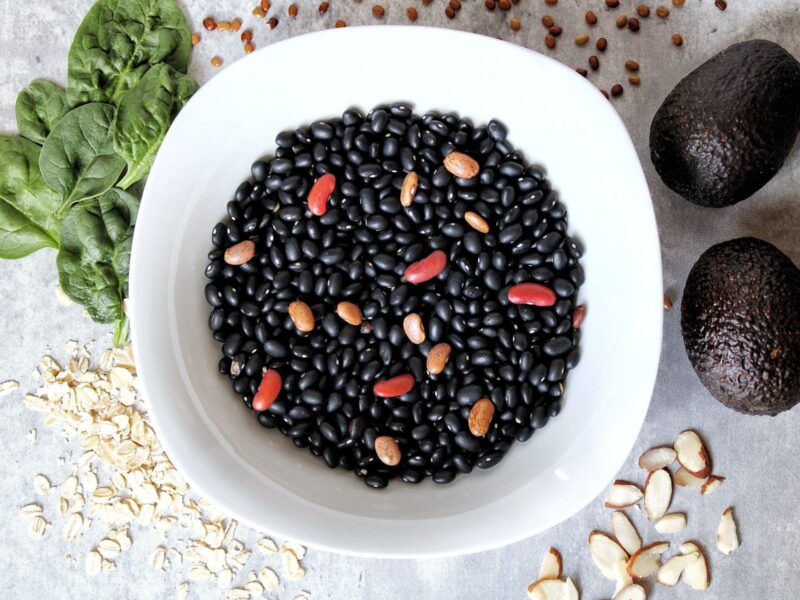
- Black beans (canned): about 15 grams per can
- Lentils (dried): roughly 15 grams per cooked cup, for pennies per serving
- Oatmeal: about 4 grams per cup cooked — add berries and it climbs
- Chia seeds: 10 grams per ounce (two tablespoons)
- Raspberries: 8 grams per cup — the highest-fiber common fruit
- Avocado: 10 grams in a whole one
Canned beans are the budget hero: cheap, shelf-stable, already cooked, and useful in everything from tacos to soups to salads. Rinse them to wash off some sodium.
Close the gap: a realistic 7-day ramp-up
Jumping from 15 to 35 grams overnight is a recipe for bloating and gas — the single biggest reason people quit. Add 5 to 10 grams per week instead, and drink an extra glass or two of water daily, because fiber needs water to do its job.
Days 1–2 — Breakfast first. Swap your usual breakfast for oatmeal topped with berries and a spoonful of flaxseed, or whole-grain toast with avocado. That's 8 to 12 grams before 9 a.m.
Days 3–4 — Add a bean night. Replace one meat-based dinner with lentil soup, black-bean tacos, or a white-bean chili. One cup of cooked beans adds 13 to 19 grams.
Days 5–6 — Snack swap. Trade the chips for an apple (skin on — that's where much of the fiber lives) with peanut butter, a handful of almonds, or air-popped popcorn. Three cups of popcorn has nearly 4 grams and costs almost nothing.
Day 7 — Audit and repeat. Glance at the Nutrition Facts label on your staples — look for products with at least 3 grams of fiber per serving (5 or more is excellent). Rebuild one more meal around a whole plant food, and you're comfortably in the high-20s without a single supplement.
A few guardrails: whole foods beat "fiber-added" bars and drinks, which often use isolated inulin that can cause bloating without the antioxidants and nutrients real food brings. If you do use a fiber supplement, treat it as a top-up, not a substitute — and pair it with water.
The bottom line
America isn't facing a protein crisis — most adults already eat plenty. It's facing a fiber crisis hiding in plain sight, quietly raising the risk of heart disease and diabetes for 9 out of 10 adults. The fix costs almost nothing, sits on a shelf in every grocery store, and starts with tomorrow's breakfast.
A can of beans, a bowl of oatmeal, an apple with the skin on. That gap is smaller than you think.
📚 Keep reading:

Why Strength Training After 40 Is Your Best Anti-Aging Move
Adults lose up to 8% of muscle per decade after 30 — but just 30 minutes of weekly strength training is linked to lower risk of death, diabetes, and heart disease.

Loneliness Is as Deadly as Smoking 15 Cigarettes a Day
The U.S. Surgeon General declared loneliness a public health epidemic. Half of American adults feel lonely — and the risks rival heavy smoking. Here's how to fight back.

How Much Water Do You Actually Need? Experts Explain
The 8-glasses rule is mostly myth. Here's what doctors say about how much water Americans really need — and the signs you're not drinking enough.