The 10-Minute Walk That Tames Blood Sugar After Meals
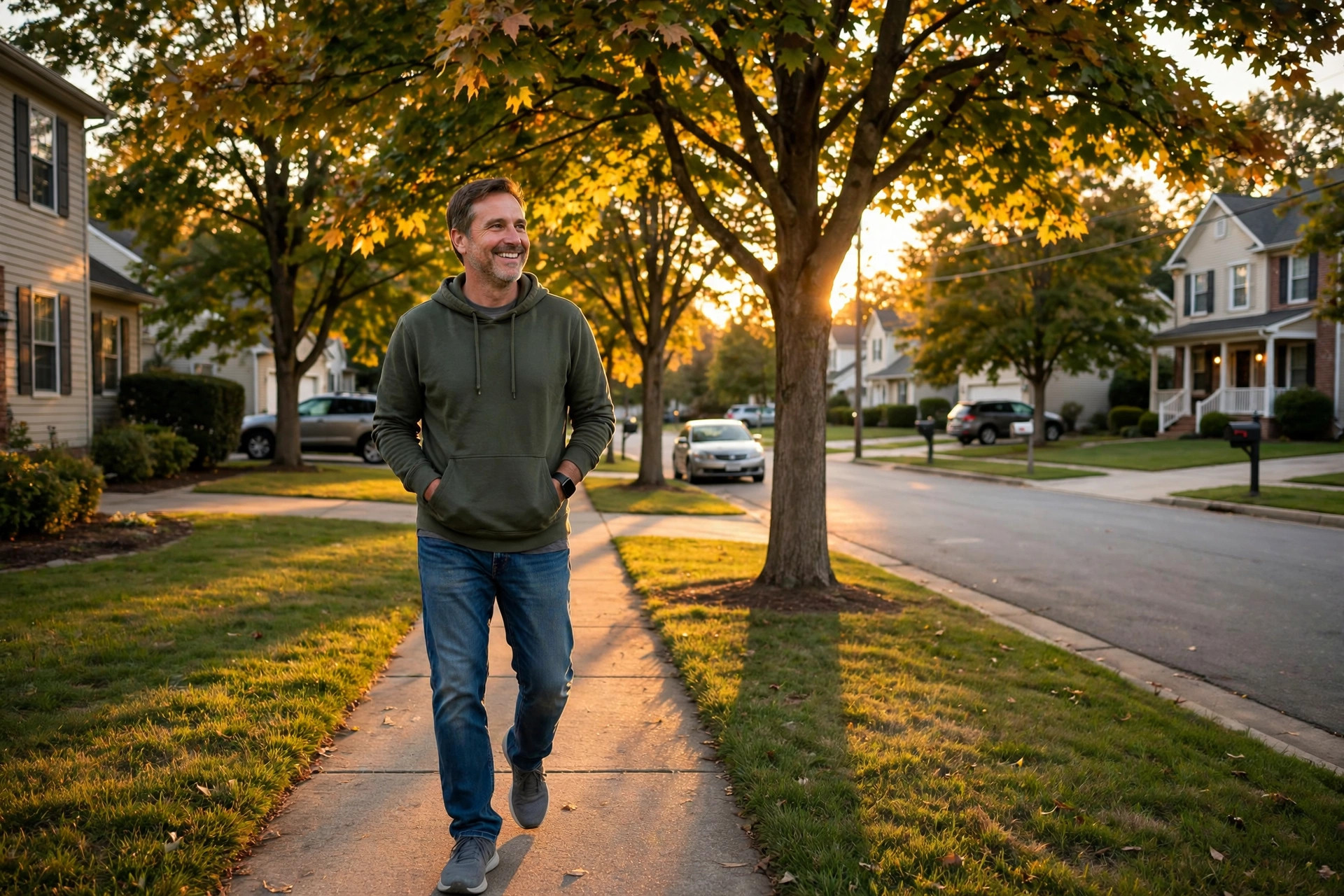
You finish lunch, lean back, and feel that familiar wave of heaviness. Most Americans do exactly what feels natural in that moment: nothing. But researchers say the single smartest move after a meal isn't a supplement or a gadget — it's standing up and walking for about ten minutes.
The science behind post-meal walks has become surprisingly strong. Even a short stroll after eating measurably flattens the blood sugar spike that follows food — and for a country where roughly 1 in 3 adults has prediabetes, according to the CDC, that's no small thing.
Why the hour after eating matters so much
Every time you eat, glucose from your food enters your bloodstream. Your pancreas responds with insulin, which ushers that glucose into your cells. That's normal and healthy — but big, repeated spikes are not.
When blood sugar surges sharply after meals, it triggers oxidative stress and low-grade inflammation, wears down insulin sensitivity over time, and nudges people along the path from normal glucose tolerance to prediabetes to type 2 diabetes. These post-meal spikes matter even for people whose fasting blood sugar looks fine — many diabetics were diagnosed only after doctors checked their after-meal numbers.
Here's the problem: modern life stacks the deck. The average American eats the largest meal of the day at dinner and then sits — on the couch, in front of a screen — through the entire glucose peak. That sedentary hour after eating is when the spike is tallest.
What the research found
A well-cited meta-analysis in Sports Medicine pooled the results of multiple trials on light activity after meals. The verdict: breaking up post-meal sitting with brief walks significantly lowered both blood sugar and insulin levels compared with staying seated. Even 2 to 5 minutes of light walking after a meal helped — and longer walks lowered spikes further, with benefits rising up to around 30 minutes.
Other trials have zeroed in on the effect size. One study found that a 15-minute walk after meals reduced post-dinner glucose spikes in people with type 2 diabetes about as effectively as a single 45-minute walk earlier in the day. And a widely reported trial showed that a short walk taken within 60 to 90 minutes after eating — right when blood sugar typically peaks — blunted the spike more than the same walk taken at another time of day.
The mechanism is elegant. When muscles contract, they pull glucose out of the bloodstream through a pathway that doesn't even need insulin (via glucose transporters called GLUT4 that move to the muscle surface during activity). You're literally soaking up sugar with every step.
Timing: when to walk matters more than how far
The research points to a sweet spot:
Start within 60 to 90 minutes of finishing your meal. Blood sugar typically peaks about an hour after eating, so walking in that window lets your muscles absorb glucose right at the peak.
Ten minutes is the magic minimum. That's enough to produce a measurable flattening of the spike. Fifteen minutes is better; 20 to 30 minutes is excellent if you have the time.
Keep it easy. This isn't a workout — it's digestion with benefits. A comfortable pace, where you can hold a conversation, is all that's required. In fact, gentle walking may beat intense exercise after a heavy meal, since hard effort can divert blood away from digestion and leave you feeling worse.
Every meal counts, but dinner matters most. The after-dinner walk delivers the biggest payoff for most Americans, because dinner tends to be the largest meal and the one most likely to be followed by hours of sitting.
Beyond blood sugar: the bonus benefits
Flattening glucose spikes isn't the only payoff:
- Less afternoon crash. That sleepy dip after lunch is driven partly by the spike-and-fall of blood sugar. Walkers report steadier energy.
- Better digestion. Gentle movement speeds gastric emptying, which means less bloating and heartburn after big meals.
- Improved insulin sensitivity over time. Done daily, post-meal walks train your muscles to clear glucose more efficiently — the exact capacity that fades in prediabetes.
- Easier weight management. Small, consistent energy expenditure adds up: a daily 15-minute walk burns roughly 50 to 70 extra calories, or more than 18,000 a year — the equivalent of over five pounds — without changing anything else.
- Better sleep. An after-dinner walk also gives you a dose of evening light (or wind-down time), which helps anchor your body's sleep-wake clock.
How to actually build the habit
The science is simple; consistency is the hard part. A few practical tricks:
- Anchor it to something you already do. The cue "after I clear the dinner plates, I walk" beats a vague intention to exercise later. Habit researchers call this implementation planning, and it works.
- Shrink the barrier. The deal isn't a 30-minute workout — it's ten minutes. You can walk around the block, up and down your hallway, or even in place while you take a call. A treadmill or a rainy-day mall walk counts.
- Make it social. An after-dinner walk with a partner, friend, dog, or podcast turns health maintenance into the most pleasant part of the evening.
- Track the streak. People who mark a simple X on a calendar for each day they walk keep the habit dramatically longer than people who don't.
- Mind the weather, not the excuse. Keep a rain jacket by the door and a route that's lit after dark. The CDC's physical activity guidelines — at least 150 minutes of moderate activity a week — are much easier to hit when two or three of those sessions happen automatically after meals.
A word of caution
Post-meal walks are safe for almost everyone, but use common sense: wait 15 to 20 minutes after a very heavy meal before setting out briskly, stay hydrated, and keep your phone or ID with you if you're walking in the dark. If you take insulin or glucose-lowering medication, check with your doctor first — combining medication with post-meal activity can occasionally push blood sugar too low.
The bottom line
No gym membership, no gear, no app subscription. A ten-minute stroll, taken in the golden hour after your meal, is one of the best-supported micro-habits in all of preventive health. It blunts blood sugar spikes, protects your insulin sensitivity, steadies your energy, and over months and years, shifts your odds meaningfully against type 2 diabetes — the disease affecting more than 38 million Americans.
Tonight, after dinner, skip the couch for ten minutes. Your blood sugar — and your future self — will thank you.
Medical disclaimer: This article is for general information only and is not medical advice. If you have diabetes, prediabetes, or take glucose-lowering medication, talk to your doctor before changing your activity routine.
📚 Keep reading:

Your Grip Strength Predicts Your Health — Here's Why
Doctors are calling grip strength a window into your biological age. What the landmark research found — and the simple exercises that rebuild it.

The Sauna Effect: What Heat Does for Your Heart
Finnish research links frequent sauna bathing to dramatically lower risks of heart disease and dementia. Here is what the science says — and how to start safely.
The Fiber Gap: Why 95% of Americans Miss This Nutrient
Over 90% of U.S. adults fall short on fiber, with average intake stuck at just 15 grams a day. Here is the gap, why it matters, and how to close it.