Protein Powder Lead Alert: What the 2025 Tests Found
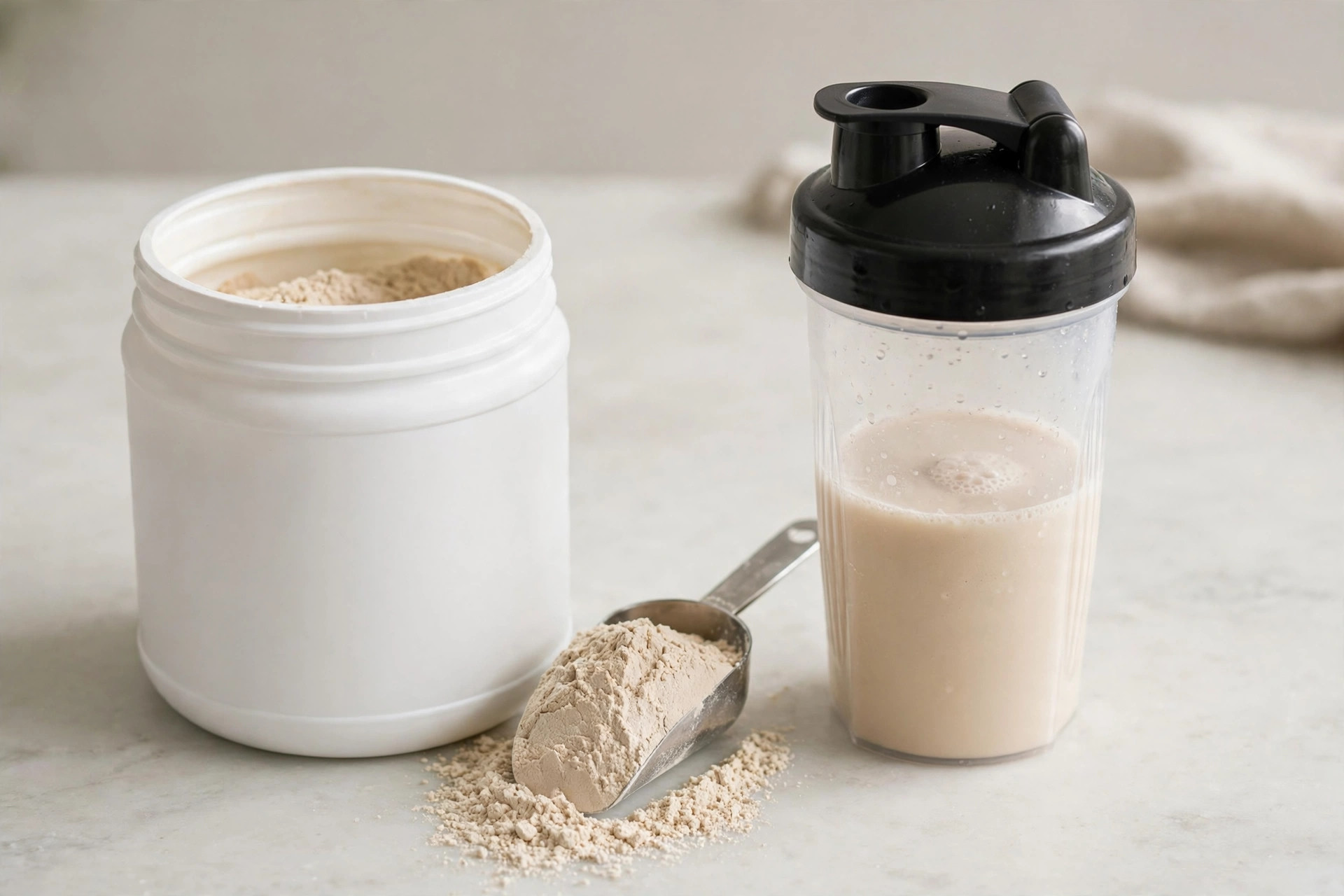
That scoop you add to your morning smoothie every day may be delivering more than muscle-building protein. An independent investigation by Consumer Reports, published October 14, 2025, found that more than two-thirds of America's most popular protein powders and shakes contain more lead in a single serving than its food-safety experts consider acceptable for an entire day. A few samples carried more than ten times that benchmark.
Before you toss your tub in the trash, some perspective is in order. The researchers themselves say healthy adults face no immediate danger from any single product. But for something millions of Americans consume daily — a $32-billion global market and counting — the results raise serious questions about what is actually inside the scoop.
What Consumer Reports actually tested
The nonprofit purchased 23 best-selling protein powders and ready-to-drink shakes — anonymously, from Amazon, Walmart, Whole Foods, and Vitamin Shoppe — and sent them to an independent ISO-accredited laboratory for analysis. Technicians tested for four heavy metals (lead, cadmium, arsenic, and mercury) and verified that each product delivered the protein it claimed on the label. Most did meet their label claims.
The lab results were compared to California's strict Proposition 65 lead guideline: 0.5 micrograms per day. Consumer Reports calls this its "level of concern" — a deliberately conservative benchmark, far stricter than the FDA's own reference levels.
The headline findings
- 16 of 23 products — more than two-thirds — exceeded the 0.5-microgram-per-serving lead benchmark. Some blew past it by more than tenfold.
- The worst offender in the published results: a plant-based mass gainer at 7.7 micrograms of lead per serving — over 15 times CR's benchmark.
- Plant-based powders averaged about 9 times more lead than whey-based ones, and roughly twice the lead of beef-based products. Two products also exceeded CR's cadmium benchmark, and one contained 8.5 micrograms of inorganic arsenic, a known human carcinogen.
- There was good news too: a follow-up test of five chocolate-flavored powders found all five safe for daily or near-daily use — proof, CR says, that cleaner manufacturing is achievable.
Why lead is the headline concern
Lead is unusual among food contaminants because there is no level of exposure experts consider truly safe. It accumulates, so the harm comes from the daily drip, not any single shake. Lead exposure is linked to kidney damage, high blood pressure, and impaired brain function, and the risk is highest for children and pregnant women, whose developing nervous systems are most vulnerable.
Context helps: the FDA's interim reference level for lead is 8.8 micrograms per day for women and 2.2 for children, and the average American diet already delivers roughly 5.3 micrograms per day from food, water, and air combined. A single serving of the worst-tested powders — 6 to nearly 8 micrograms — can nearly double your daily exposure in one shake.
Where the metals come from
Nobody is sprinkling lead into your whey. Heavy metals occur naturally in soil, and plants absorb them as they grow — which is why plant-based proteins (pea, rice, hemp, soy) consistently test higher than dairy-based whey or collagen. Chocolate is another accumulator: cocoa plants are notorious for pulling cadmium and lead from soil, which helps explain why cocoa-flavored products often test highest.
The deeper problem is regulatory. The FDA does not approve dietary supplements before they reach store shelves, and there are no federal limits on heavy metals in protein powders. Manufacturers face no legal requirement to test for these contaminants or to disclose what they find. In response, California has drafted a bill requiring protein product makers to test for toxic elements and publish the results — a proposal backed, per a CR survey, by 86 percent of Americans.
How to pick a safer powder: 7 practical tips
You do not have to quit protein powder. These steps dramatically lower your exposure:
1. Favor whey or collagen over plant-based for daily use
The data is clear: whey and collagen-based products tested far lower in lead than plant-based formulas. If you use powder every day, dairy-based is the safer default.
2. Look for third-party certification seals
Check the label for NSF Certified for Sport, Informed Sport, or USP Verified. These programs independently test for contaminants — including heavy metals — and audit manufacturing. A brand that pays for certification is a brand that expects scrutiny.
3. Skip the mass gainers for everyday use
Mass-gainer tubs deliver enormous servings — often 2 to 4 scoops — and the worst test results in the CR investigation came from this category. If you use one, cycle it rather than making it a daily habit.
4. Get most of your protein from food first
Most Americans already eat enough protein. Two eggs (12g), a cup of Greek yogurt (17g), 4 ounces of chicken breast (35g), a can of tuna (25g), or a cup of lentils (18g) cover a typical adult's needs without touching a tub. Powder should fill gaps, not form the base of your intake.
5. Vary your brand
No single product's formula or sourcing is constant. Rotating between two or three certified products prevents you from getting a steady dose of contaminants from one supply chain.
6. Keep powders away from kids and pregnancy unless your doctor approves
CR flags children and pregnant people as the highest-risk groups, and notes that some tested products approached or exceeded the FDA's reference levels for these groups. If someone under 18 or pregnant is using a powder, that choice deserves a conversation with a doctor or pediatrician.
7. Treat the "Prop 65 warning" on the label as information, not panic
Many supplements carry California's lead warning label. Its presence means the product exceeds 0.5 micrograms per day of lead — exactly the benchmark CR used. It is not proof of danger, but it is a real signal worth acting on by switching to a cleaner option.
Frequently asked questions
Should I stop using protein powder entirely? For healthy adults, no — Consumer Reports itself found clean options suitable for daily use. The smart move is switching to a tested, certified product rather than quitting outright.
Is whey really safer than plant protein? In this testing, yes — by a wide margin. Plant-based powders averaged roughly nine times the lead of whey. If you need plant-based for dietary reasons, stick to brands that publish third-party heavy-metal test results.
Do organic or "clean label" powders test better? Not necessarily. Metals come from the soil, not the processing, so organic certification says nothing about heavy-metal content. Third-party contaminant testing is the label that actually matters.
The bottom line
Protein powder remains one of the most convenient ways to fill a nutrition gap — but "convenient" should not mean "unchecked." Independent testing showed a wide gulf between the cleanest and dirtiest products in the aisle, and the cleanest ones prove that safe, daily-usable powders exist today. Choose a certified whey or collagen product, treat the tub as a backup rather than a meal plan, and let your plate do the heavy lifting.
This article is for informational purposes only and is not medical advice. If you are pregnant, nursing, or have kidney disease or a chronic condition, talk to your doctor before using protein supplements.
Rao Sajid is the founder and editor of VitalDaily. He covers everyday health topics — nutrition, sleep, fitness and wellness — turning guidance from public-health sources like the CDC, NIH and FDA into plain, practical advice. More about Rao →
📚 Keep reading:

Fibromyalgia: Causes, Symptoms, and What Helps
Fibromyalgia affects roughly 4 million U.S. adults with widespread pain, crushing fatigue, and brain fog. Here's what science knows about causes, diagnosis, and treatments that work.
Do You Really Need a Multivitamin? What Science Says
Roughly one in three Americans swallows a multivitamin every day, spending billions a year. But what do the biggest clinical trials actually show? The answer is more nuanced than the ads.

Is Cracking Your Knuckles Actually Bad for You?
Your parents swore cracking knuckles causes arthritis. One doctor cracked only one hand for 50 years to prove them wrong — and the science backs him up. Here's the truth.